If it can happen to the FBI, it can happen to you
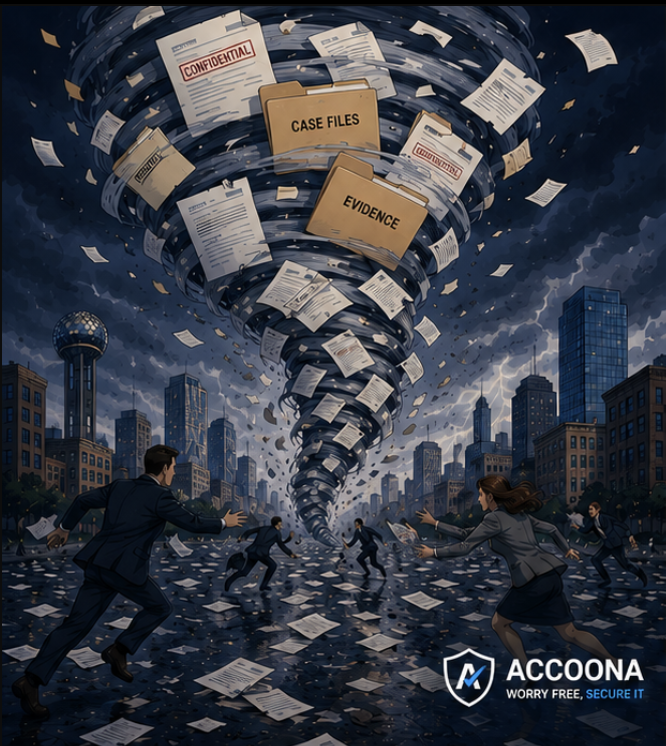
Here’s what has always struck me about that story. The FBI is, by any measure, one of the most security-minded organizations on the planet. Its locked cabinets and security mechanisms actually held. And still, in a matter of seconds, sensitive federal case files ended up scattered across a Texas city, where anyone walking by could have picked them up. It took dozens of agents combing the streets by hand to try to get them back — and even then, the bureau couldn’t say for certain what was lost.
That’s the lesson every business owner should sit with: you never know where your sensitive information will end up. Not “probably won’t know.” Never know. And the magnitude of your business doesn’t change the magnitude of your exposure. Whether you’re a federal agency, a law firm on the 14th floor of a downtown tower, or a five-person shop off I-35, client records, financials, contracts, and personal data in the wrong hands do the same kind of damage: broken trust, legal liability, and in the worst cases, a business that never reopens.
Today, the tornado is digital
More than a quarter century later, most of your sensitive information doesn’t sit on desktops anymore. It lives on servers, laptops, phones, and cloud accounts. That might make you feel safer. It shouldn’t.
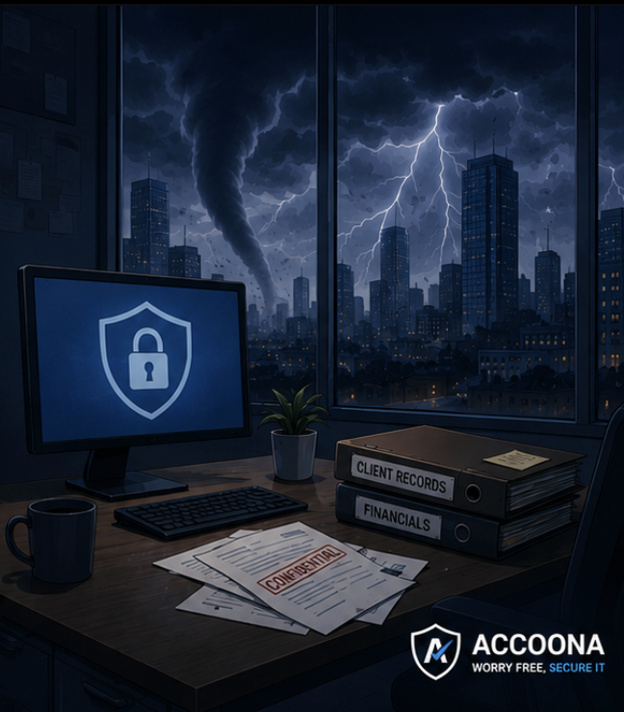
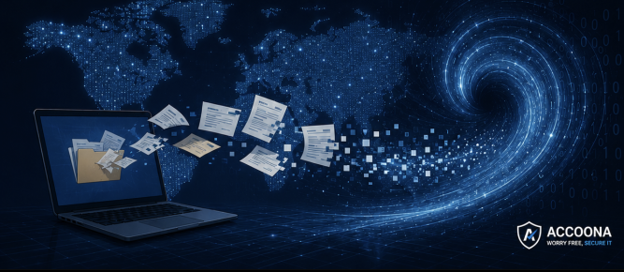
The modern version of that Fort Worth tornado is a ransomware attack, a phished password, or a misconfigured database. And unlike paper, digital data doesn’t scatter across twelve city blocks where agents in gloves can search for it. It scatters across the entire internet — instantly, and permanently. There are no disposable gloves for a data breach. Nobody gets to walk the streets and pick your customer records back up.
The FBI at least knew its cabinets were locked. Do you know, right now, where all of your company’s sensitive data lives? Who can access it? What happens to it if your systems — or your building — are gone tomorrow?



 Jul 08, 2026